Manuscript features
Curated selections appear first, followed by additional observations.
2348 observations
 masoretica · Penn CAJS Halper 22 (2 Kings Genizah leaf)Folio 1 recto — 2 Kings 5:11–13Folio 1 recto: the folded sheet preserves overlapping stages of reuse—an earlier lengthwise Arabic letter and later burial-service writing—alongside the biblical passage. Complete-surface HTR retains these traces without treating them as another biblical version.Open page →
 masoretica · Penn CAJS Halper 22 (2 Kings Genizah leaf)Folio 1 verso — 2 Kings 5:8–11Folio 1 verso: the reverse completes the reused sheet's physical record while preserving the opening half of 2 Kings 5:8–13; earlier or later marks remain visible around the biblical writing.Open page →
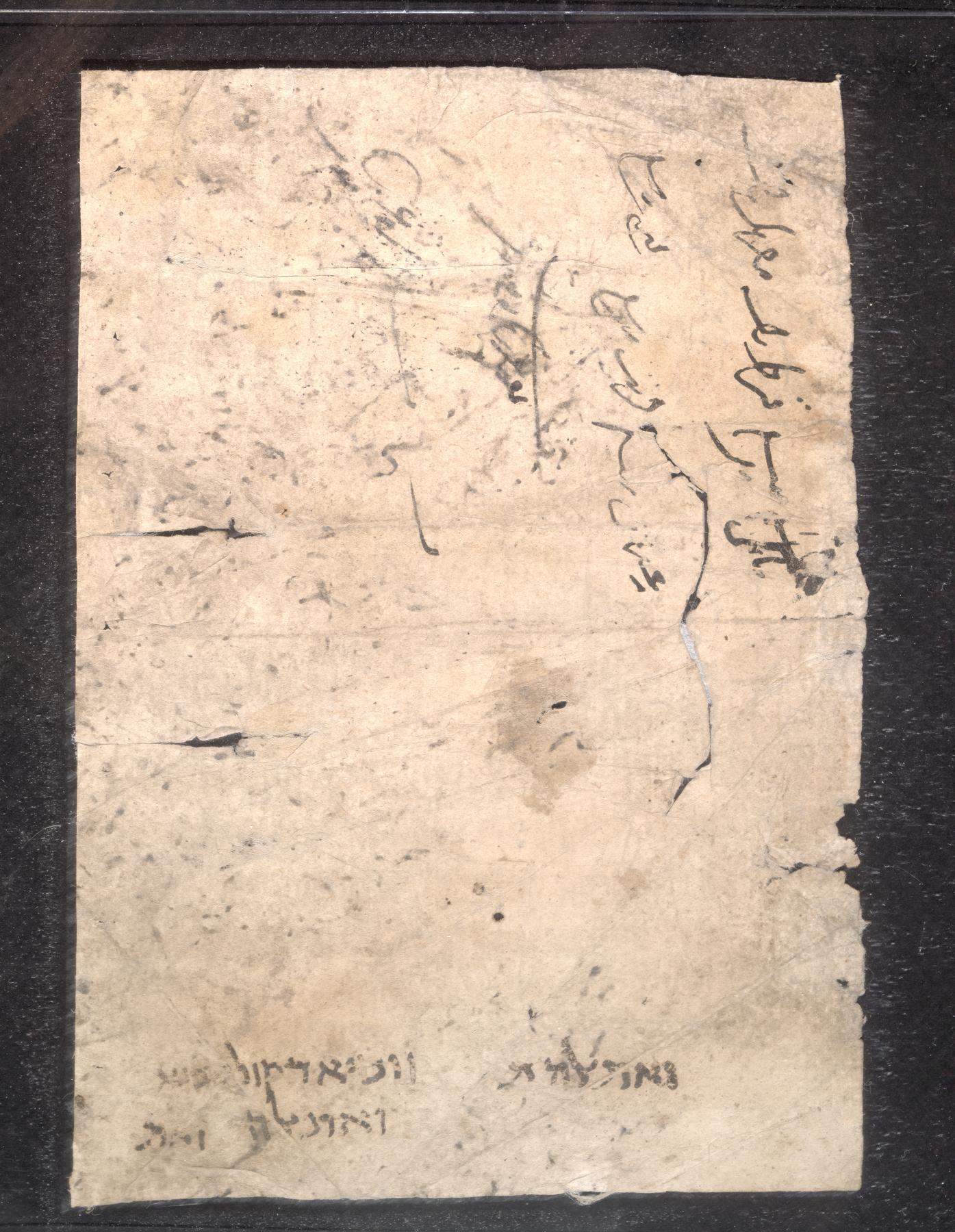 masoretica · Penn CAJS RAR MS 85.126.13a (Hebrew and Saadia Tafsir on Leviticus)Folio 1 verso — no indexed biblical text (later exercises)Folio 1 verso: after the bilingual biblical recto was no longer in its original use, two writing exercises were added to the reverse, one in Arabic script. The surface remains in physical navigation with no fabricated biblical assignment.Open page →
 masoretica · British Library Or. 2696 (Ashkenazi Pentateuch, Five Scrolls, and haftarot)Inserted folio 28* verso · reused guard material · no indexed biblical textInserted folio 28* verso: reused parchment guard material interrupts the numbered folio sequence after fol. 28v; it remains in physical navigation but has no securely indexed biblical text.Open page →
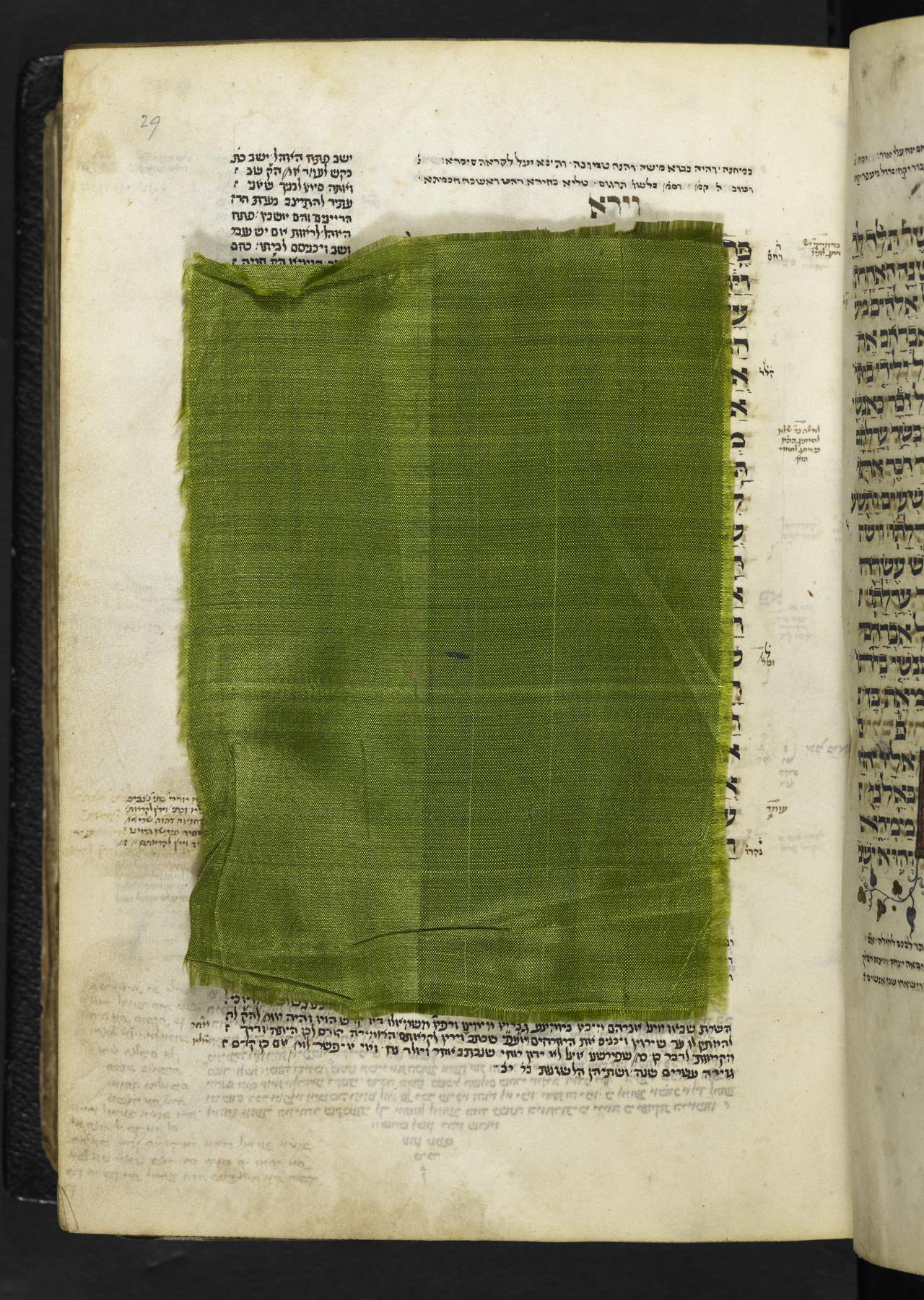 masoretica · British Library Or. 2696 (Ashkenazi Pentateuch, Five Scrolls, and haftarot)Inserted folio 29* recto · reused guard material · no indexed biblical textInserted folio 29* recto: a second reused guard follows fol. 29v in the actual binding; its earlier writing is not treated as part of the host codex's biblical sequence.Open page →
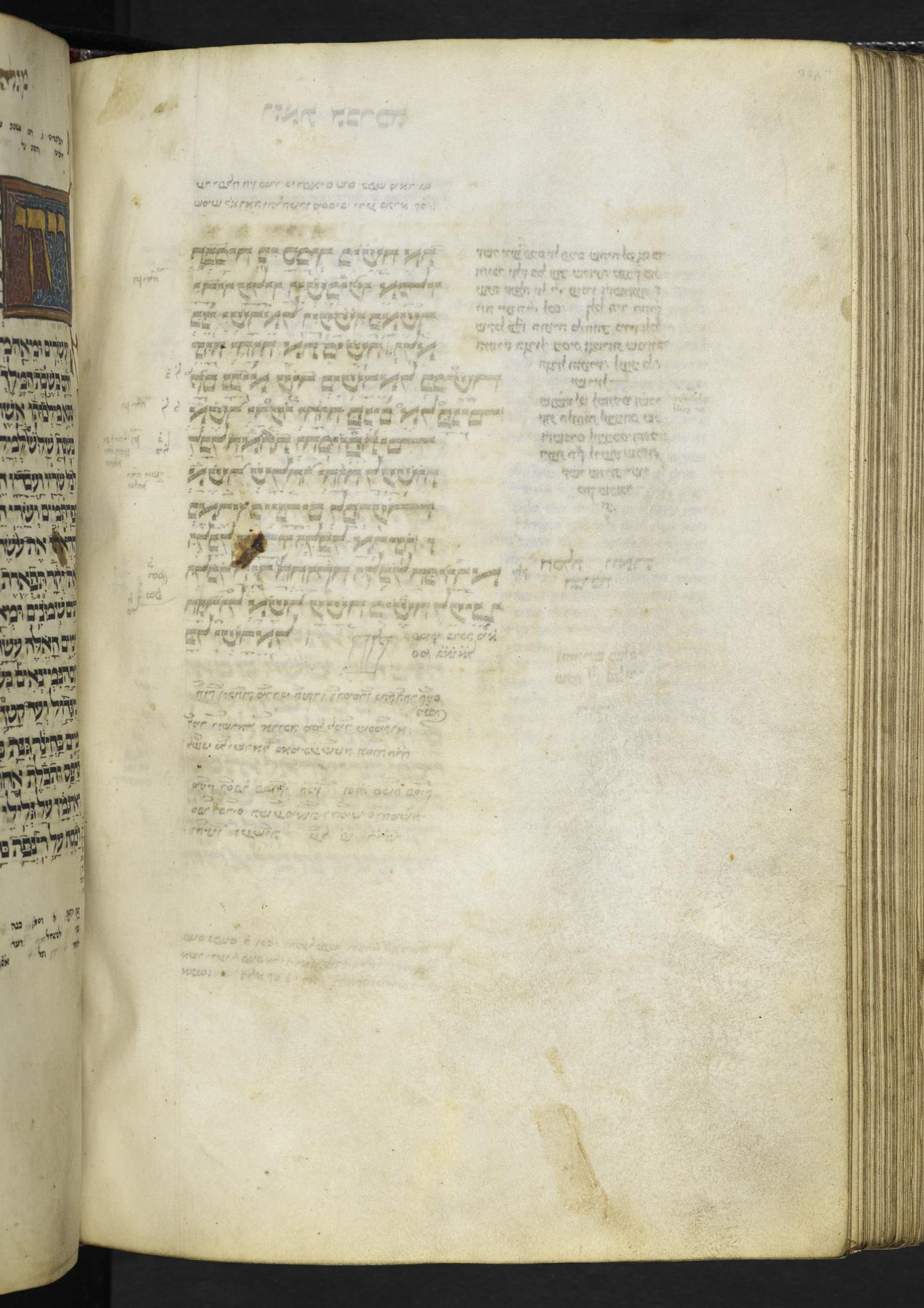 masoretica · British Library Or. 2696 (Ashkenazi Pentateuch, Five Scrolls, and haftarot)Folio 422 verso · erased earlier writing · no indexed biblical textFolio 422v: erased earlier writing remains visible on the surface immediately after the end of Deuteronomy; the palimpsest-like traces are retained without assigning an unsupported biblical passage.Open page →
 masoretica · Bodleian MS. Arch. Selden A. 47fol. 397rFolio 397r: the first detached parchment leaf begins at Jeremiah 31:33 and remains physically after the ownership material and blank leaves; its biblical text is indexed as a repeated occurrence.Open page →
 masoretica · Bodleian MS. Arch. Selden A. 47fol. 397vFolio 397v: the reverse of the first detached leaf continues through Jeremiah 32:14, completing this reused two-surface fragment.Open page →
 masoretica · Bodleian MS. Arch. Selden A. 47fol. 398rFolio 398r: the second detached parchment leaf begins at Jeremiah 36:22 and continues into chapter 37; it is indexed separately from the codex's earlier Jeremiah copy.Open page →
 masoretica · Bodleian MS. Arch. Selden A. 47fol. 398vFolio 398v: the reverse of the second detached leaf preserves Jeremiah 37:4–20 and closes the reused biblical material before the final controls.Open page →
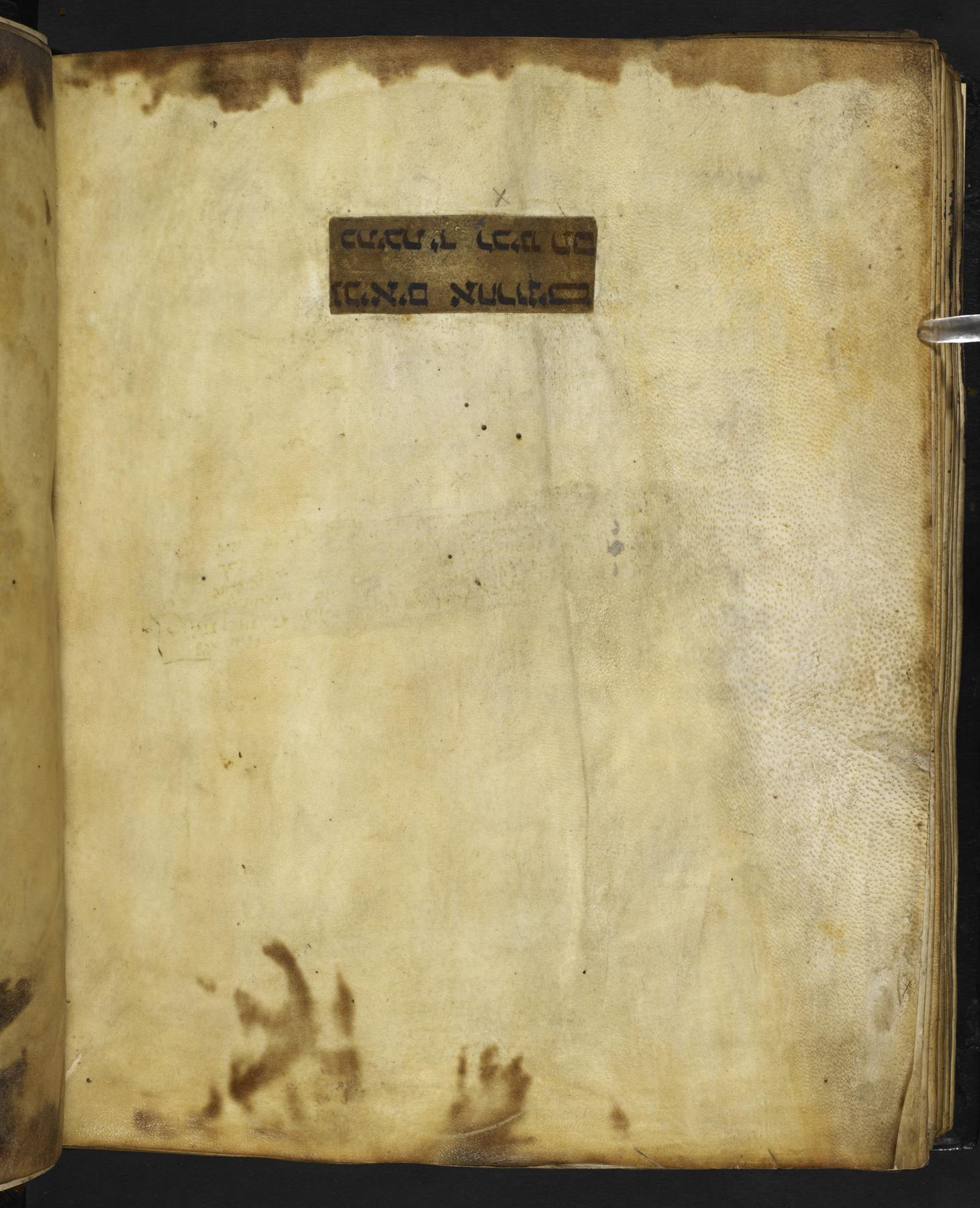 masoretica · British Library Add MS 4708 (12th–13th-century Latter Prophets)Added leaf 213* verso · pasted vellum ownership label; no indexed biblical textThe added leaf after fol. 213 carries a pasted parchment ownership label identifying the volume as the Latter Prophets and attributing its hand to Rabbenu Tam; the label is later evidence of ownership or esteem, not a colophon by the biblical scribe.Open page →
 masoretica · Bodleian Library MS. Huntington 3671rFolio 1r is a pasted or reused non-biblical sheet carrying ownership and contents notes.Open page →
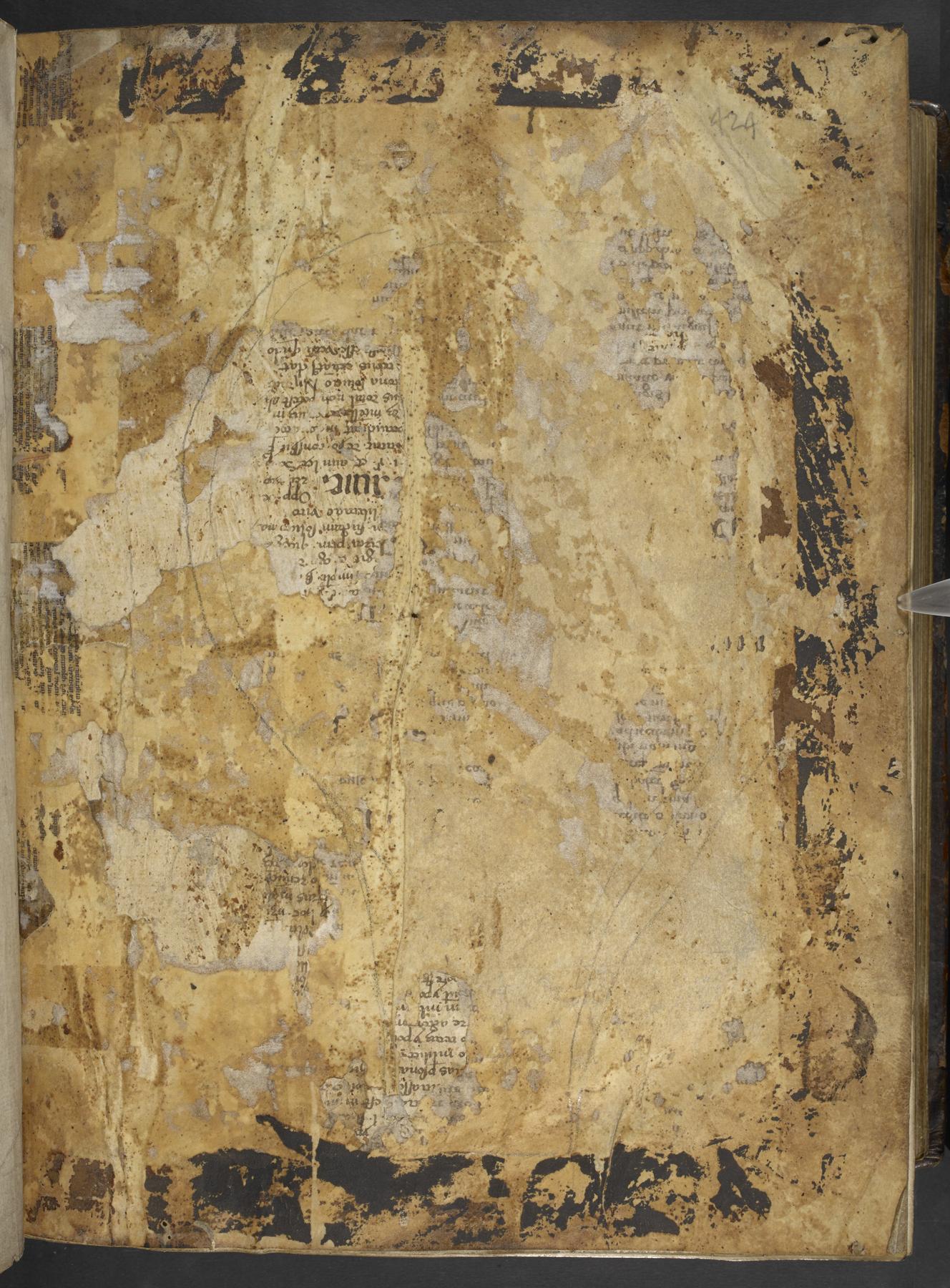 masoretica · Harley Catalan Bible (British Library Harley MS 1528, 1325–1374)Folio 424 verso · heavily abraded reused Latin pastedown · no indexed biblical textFolio 424v: a heavily abraded Latin manuscript leaf was reused as the rear pastedown. It belongs to the binding history rather than the Hebrew biblical sequence and remains available without a fabricated verse assignment.Open page →
 masoretica · Bodleian MS. Canon. Or. 1361rFolio 1r is an older biblical fragment reused sideways as a binding leaf.Open page →
 masoretica · Bodleian MS. Canon. Or. 1361vFolio 1v is the other side of an older biblical fragment reused sideways as a binding leaf.Open page →
 masoretica · Bodleian MS. Canon. Or. 136354rFolio 354r is an older biblical fragment reused sideways as a binding leaf.Open page →
 masoretica · Bodleian MS. Canon. Or. 136354vFolio 354v is the other side of an older biblical fragment reused sideways as a binding leaf.Open page →
 masoretica · Bodleian Library MS. Kennicott 214rFolio 14r: a golden geometric interlace is enclosed by a red-and-gold border carrying Psalm 19:8–9.Open page →
 masoretica · Bodleian Library MS. Kennicott 214vFolio 14v: a red, gold, and green interlace panel is framed by a large Hebrew inscription.Open page →
 masoretica · Bodleian Library MS. Kennicott 215rFolio 15r: a dense golden interlace with a small central motif is enclosed by a red vegetal border.Open page →
 masoretica · Metropolitan Museum Hebrew Bible 2018.59 (formerly Utopia cod. 6, 1300–1350)Folio IIr · illuminated Masoretic carpet page · no indexed biblical textFolio IIr: one of the sixteen opening full-page Masoretic carpet designs, where minute Masoretic writing is arranged as a self-contained geometric composition.Open page →
 masoretica · Metropolitan Museum Hebrew Bible 2018.59 (formerly Utopia cod. 6, 1300–1350)Folio IIv · illuminated Masoretic carpet pageFolio IIv: one of the sixteen opening full-page Masoretic carpet designs, where minute Masoretic writing is arranged as a self-contained geometric composition.Open page →
 masoretica · Metropolitan Museum Hebrew Bible 2018.59 (formerly Utopia cod. 6, 1300–1350)Folio IIIr · illuminated Masoretic carpet page · no indexed biblical textFolio IIIr: one of the sixteen opening full-page Masoretic carpet designs, where minute Masoretic writing is arranged as a self-contained geometric composition.Open page →
 masoretica · Metropolitan Museum Hebrew Bible 2018.59 (formerly Utopia cod. 6, 1300–1350)Folio IIIv · illuminated Masoretic carpet pageFolio IIIv: one of the sixteen opening full-page Masoretic carpet designs, where minute Masoretic writing is arranged as a self-contained geometric composition.Open page →
 masoretica · Metropolitan Museum Hebrew Bible 2018.59 (formerly Utopia cod. 6, 1300–1350)Folio IVr · illuminated Masoretic carpet pageFolio IVr: one of the sixteen opening full-page Masoretic carpet designs, where minute Masoretic writing is arranged as a self-contained geometric composition.Open page →
 masoretica · Metropolitan Museum Hebrew Bible 2018.59 (formerly Utopia cod. 6, 1300–1350)Folio IVv · illuminated Masoretic carpet page · no indexed biblical textFolio IVv: one of the sixteen opening full-page Masoretic carpet designs, where minute Masoretic writing is arranged as a self-contained geometric composition.Open page →
 masoretica · Metropolitan Museum Hebrew Bible 2018.59 (formerly Utopia cod. 6, 1300–1350)Folio Vr · illuminated Masoretic carpet page · no indexed biblical textFolio Vr: one of the sixteen opening full-page Masoretic carpet designs, where minute Masoretic writing is arranged as a self-contained geometric composition.Open page →
 masoretica · Metropolitan Museum Hebrew Bible 2018.59 (formerly Utopia cod. 6, 1300–1350)Folio Vv · illuminated Masoretic carpet page · no indexed biblical textFolio Vv: one of the sixteen opening full-page Masoretic carpet designs, where minute Masoretic writing is arranged as a self-contained geometric composition.Open page →
 masoretica · Metropolitan Museum Hebrew Bible 2018.59 (formerly Utopia cod. 6, 1300–1350)Folio VIr · illuminated Masoretic carpet pageFolio VIr: one of the sixteen opening full-page Masoretic carpet designs, where minute Masoretic writing is arranged as a self-contained geometric composition.Open page →
 masoretica · Metropolitan Museum Hebrew Bible 2018.59 (formerly Utopia cod. 6, 1300–1350)Folio VIv · illuminated Masoretic carpet page · no indexed biblical textFolio VIv: one of the sixteen opening full-page Masoretic carpet designs, where minute Masoretic writing is arranged as a self-contained geometric composition.Open page →
Deuterocanonical and related texts
Some biblical manuscripts—including witnesses in the Masoretic tradition—preserve works outside the Jewish canon beside Scripture or its Aramaic Targum. This guide explains the texts, manuscripts, and scholarship, and updates automatically as occurrences are added.
3 texts · 9 occurrences · 6 manuscripts→About Masoretica
Sources & method.
Manuscript images and metadata come from the holding institutions and digitisation projects listed below. Text and versification data come from UXLC, MAM, BIMA / Corpus Masoreticum, the Codex Sinaiticus Project, the DT-UCPH Samaritan Pentateuch, lxx-morph, and STEPBible. The viewer identifies the source used for each manuscript.
Page mapping and text recognition combine repository indexes, OCR, and transcriptions with kraken, Party, BiblIA, and other specialised HTR models. OpenAI Codex is used in developing the site and in running and reviewing this workflow.
Full source, credit, and licence links appear below.
Sources and licences
UXLC Leningrad index Leningrad scan Leningrad photography credit Aleppo page index Aleppo facsimile Codex Sassoon 1053 page index Sassoon scan Sassoon catalogue Rylands Samaritan scan Rylands Samaritan MS 2 scan Rylands Samaritan MS 4 scan Gaster Samaritan MS 1133 scan Gaster Trilingual Samaritan MS 814 scan Gaster Samaritan MS Add 1 scan Gaster Samaritan MS 1858 scan Bodley Or. 699 Samaritan scan Bodley Or. 23 Isaiah scan Kennicott 1 scan Kennicott 2 scan Kennicott 3 scan Kennicott 4 scan Kennicott 5 scan Kennicott 6 scan Kennicott 7 scan Kennicott 8 scan kraken OCR and HTR toolkit Party multilingual HTR model used for Alexandrinus BiblIA medieval Hebrew model Samaritan kraken model Greek minuscule kraken model Sinaiticus line-segmentation model Miqra according to the Masorah text BIMA / Corpus Masoreticum manuscript transcriptions · CC BY-SA 4.0 Samaritan Pentateuch reference text Alexandrinus facsimile Rahlfs 82 catalogue Rahlfs 82 digitization Vaticanus facsimile Sinaiticus edition Sinaiticus electronic transcription Septuagint reference text Greek–Hebrew verse-number crosswalk Keter Aram Tsova typeface
For scholarly use
How to cite.
If Masoretica has facilitated your research, I would be grateful for a citation.
Preferred citation
Dershowitz, Idan. “Masoretica: Manuscript Explorer.” Accessed 12 October 2026. https://www.masoretica.org/.For a specific manuscript page, use its Cite button for the complete Masoretica and holding-institution citations. Pages using BIMA also include a BIMA citation, license link, and description of changes.