 masoretica · Metropolitan Museum Hebrew Bible 2018.59 (formerly Utopia cod. 6, 1300–1350)Folio Ir · 1526 Thessaloniki sale contract · no indexed biblical textPreliminary fol. Ir: the Hebrew sale contract written at Thessaloniki in 1526 records a documented transfer in the codex's post-medieval ownership history.Open page →
Manuscript features
Curated selections appear first, followed by additional observations.
Page-specific evidence for a manuscript's transfer, purchase, ownership, or later collecting history. These records explain how a volume circulated without being treated as part of its biblical text.
25 observations
masoretica · Metropolitan Museum Hebrew Bible 2018.59 (formerly Utopia cod. 6, 1300–1350)Folio Ir · 1526 Thessaloniki sale contract · no indexed biblical textPreliminary fol. Ir: the Hebrew sale contract written at Thessaloniki in 1526 records a documented transfer in the codex's post-medieval ownership history.Open page → masoretica · Metropolitan Museum Hebrew Bible 2018.59 (formerly Utopia cod. 6, 1300–1350)Folio 467v · dated ownership and later possessor notes · no indexed biblical textFolio 467v: dated and undated Hebrew possessor notes record later hands through which the complete Bible passed.Open page →
 masoretica · British Library Or. 2696 (Ashkenazi Pentateuch, Five Scrolls, and haftarot)Folio 1 recto · later ownership inscription · no indexed biblical textFolio 1r: later ownership and documentary inscriptions occupy the preliminary leaf before Genesis begins on fol. 3r.Open page →
 masoretica · British Library Or. 2696 (Ashkenazi Pentateuch, Five Scrolls, and haftarot)Folio 2 recto · partially legible Hebrew inscriptions · no indexed biblical textFolio 2r: additional Hebrew ownership writing records the codex's circulation before its biblical opening.Open page →
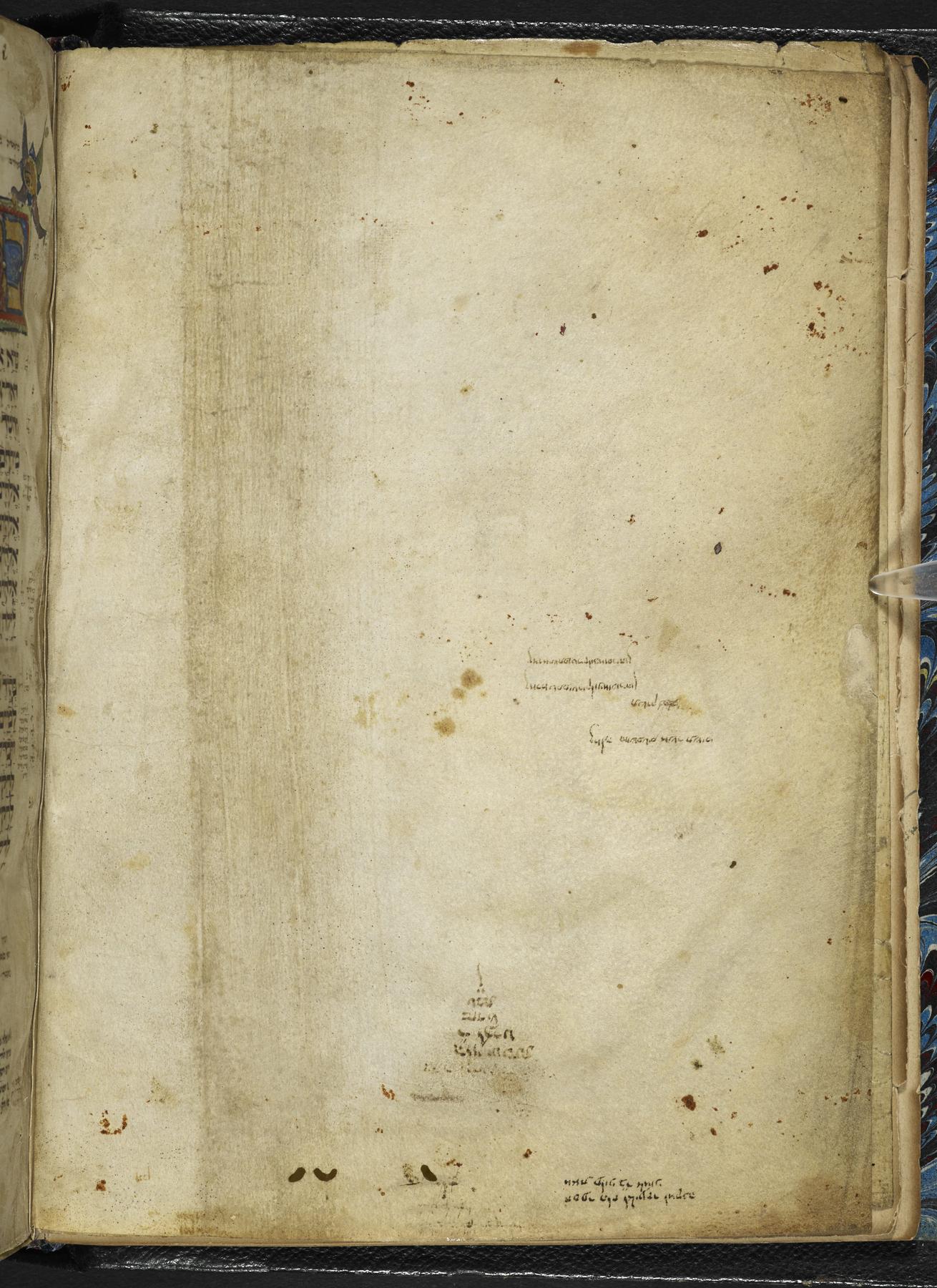 masoretica · British Library Or. 2696 (Ashkenazi Pentateuch, Five Scrolls, and haftarot)Folio 2 verso · partially legible Hebrew inscriptions · no indexed biblical textFolio 2v: the preliminary ownership sequence continues on the verso and remains navigable as documentary rather than biblical content.Open page →
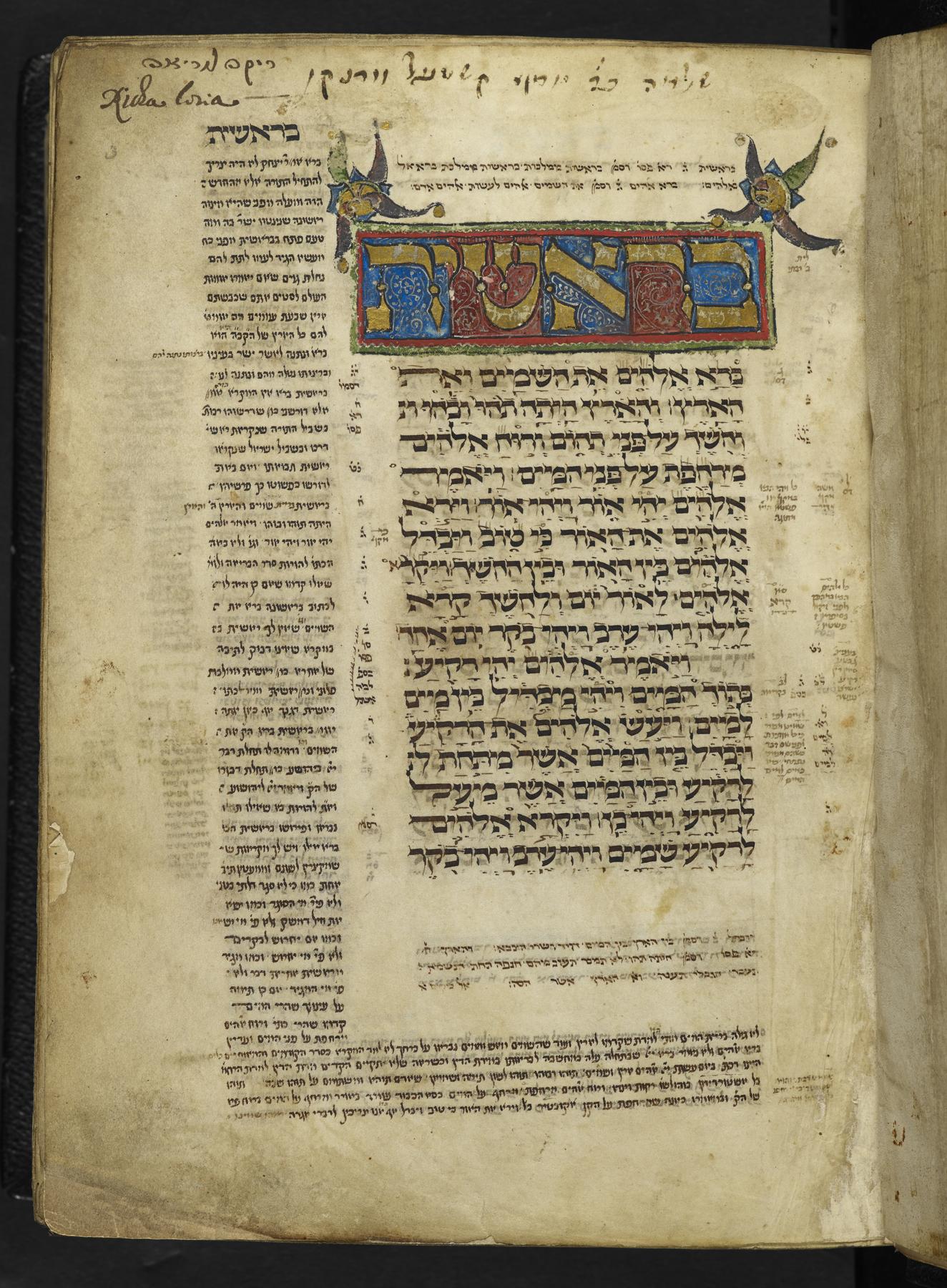 masoretica · British Library Or. 2696 (Ashkenazi Pentateuch, Five Scrolls, and haftarot)Folio 3 rectoFolio 3r: ownership writing shares the surface on which the painted opening of Genesis begins, so the same photograph documents both circulation and biblical text.Open page →
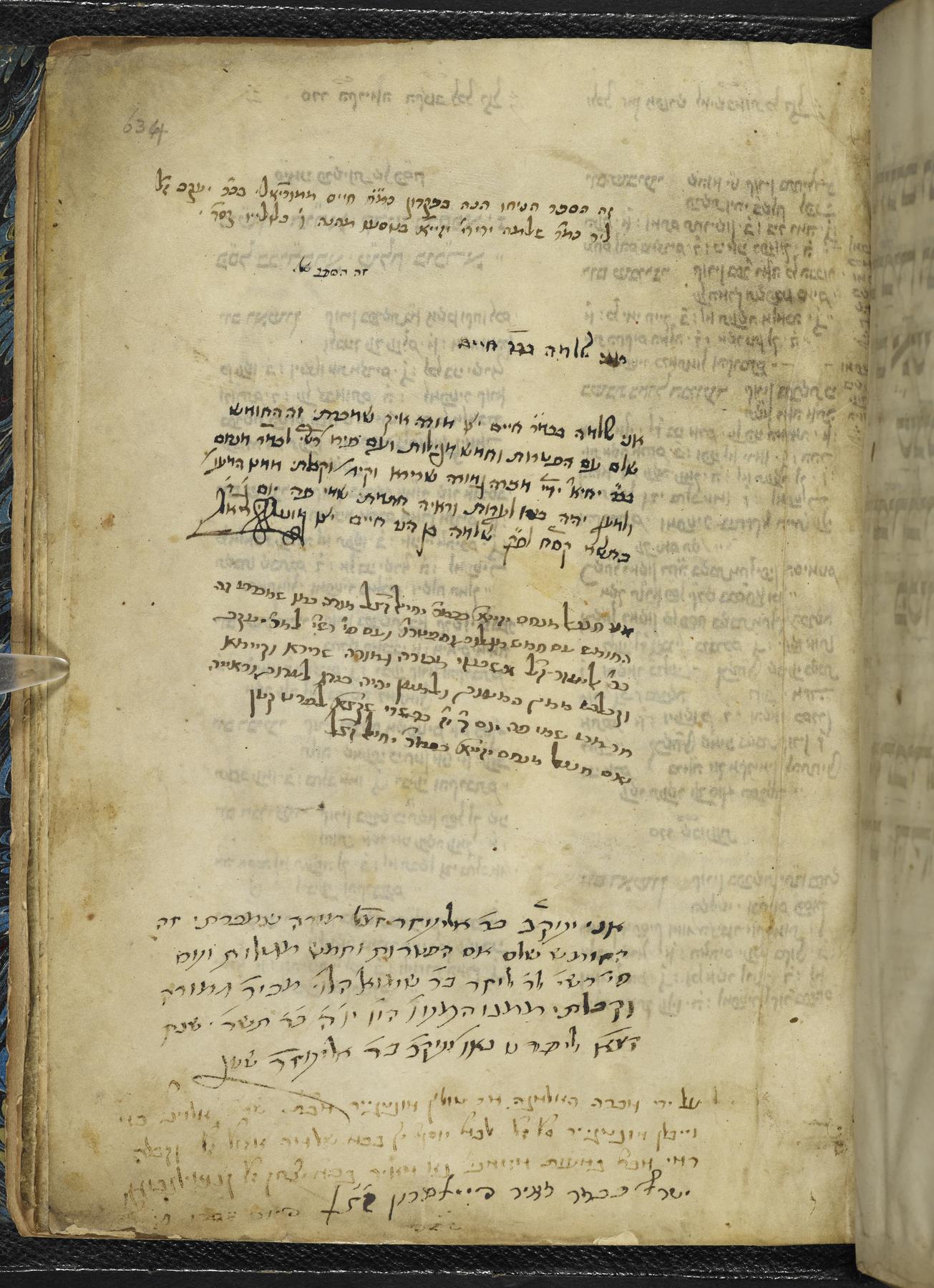 masoretica · British Library Or. 2696 (Ashkenazi Pentateuch, Five Scrolls, and haftarot)Folio 634 recto · ownership and sale notes · no primary indexed biblical textFolio 634r: numerous later ownership and sale notes assemble a documentary record of the manuscript's movement before the British Museum purchased it in 1883.Open page →
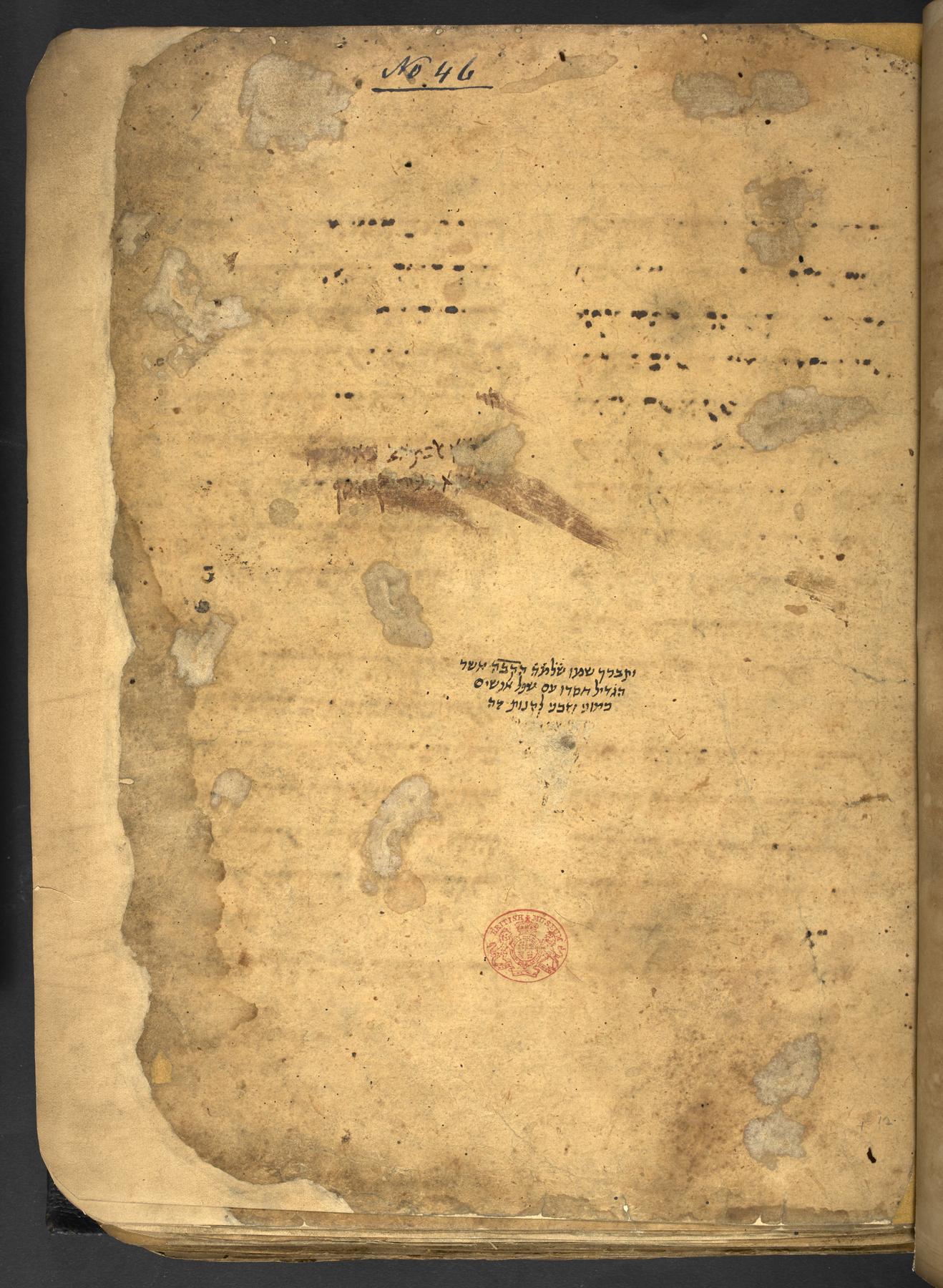 masoretica · British Library Or. 2365 (Yemenite Masoretic Pentateuch)Folio 1 recto · ownership inscriptions and erased writing · no indexed biblical textFolio 1r: named Hebrew ownership inscriptions and partly erased writing occupy the opening leaf; Genesis begins on the verso, so this documentary surface remains in physical navigation without a biblical assignment.Open page →
 masoretica · Rösel Bible (Berlin Mss. or. fol. 1–4)Volume 1 · fol. 1rVolume 1, fol. 1r: ownership and library writing on the preliminary surface belongs to the witness’s documented history before the decorated opening of Genesis; the four-volume Bible was donated by Rösel, wife of Benjamin Neumark, to the Elector’s library in 1692.Open page →
 masoretica · Cambridge University Library MS Add. 1753 (Writings)Folio 1 recto · documentary and ownership notes; no indexed biblical textFolio 1r: several documentary notes include ownership and copying records before 1 Chronicles begins on the verso; the surface has no indexed biblical text.Open page →
 masoretica · Bodleian MS. Canonici Or. 87380vFolio 380v: a later Hebrew ownership note dated 1646 records the Bible's presence in Ferrara while remaining distinct from the biblical text on the page.Open page →
 masoretica · Bodleian MS. Canonici Or. 87410rFolio 410r: a second Hebrew ownership note dated 1646, marked by a small crown drawing, supplies another page-specific record of the codex in Ferrara.Open page →
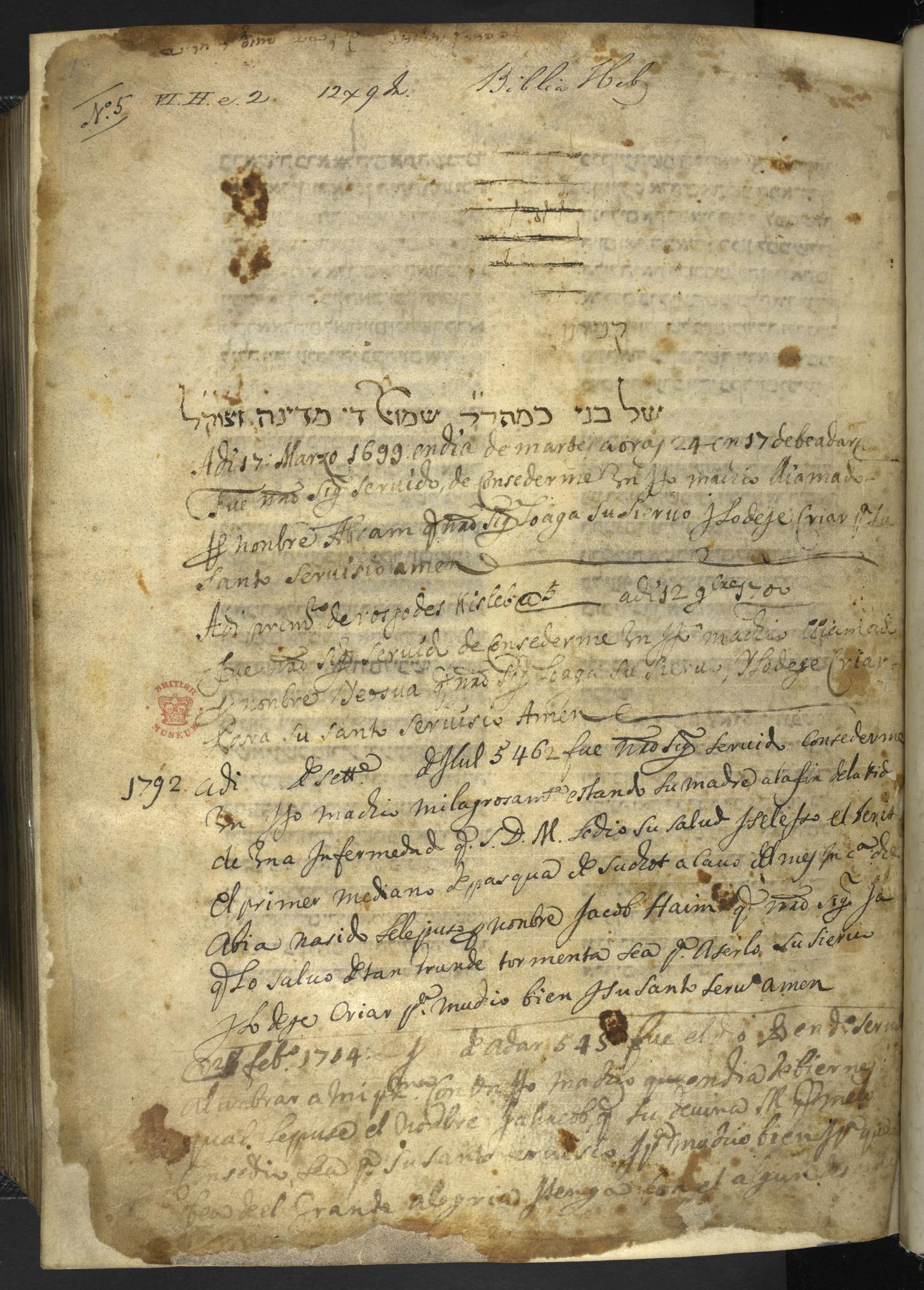 masoretica · Duke of Sussex Bible (British Library Add MS 15252, 1350–1374)Folio 1r recto · Shemu'el de Medina purchase note and Spanish birth entries; no indexed biblical textFolio 1r: Shemu'el ben Mosheh de Medina's purchase note records an early owner in Salonica; four Spanish birth entries dated 1699, 1700, 1702, and 1704 preserve later family history on the non-biblical opening surface.Open page →
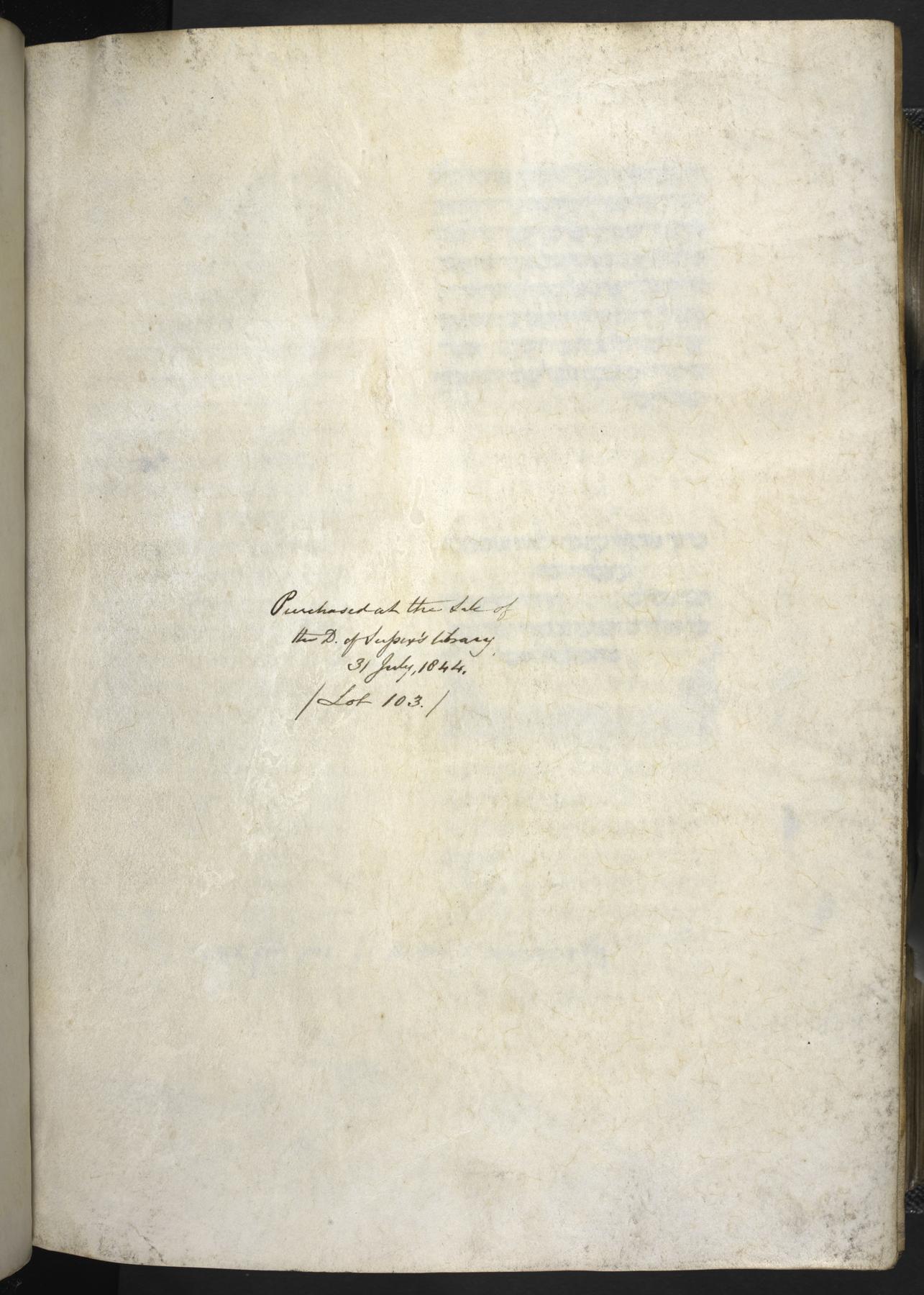 masoretica · Duke of Sussex Bible (British Library Add MS 15252, 1350–1374)Rear flyleaf i verso · Duke of Sussex sale inscription, 31 July 1844, lot 103; no indexed biblical textRear flyleaf i verso (catalogued as fol. 478v): the inscription records purchase at the Duke of Sussex's library sale on 31 July 1844, lot 103; the British Museum catalogue records the £5 purchase through Thomas Rodd the younger.Open page →
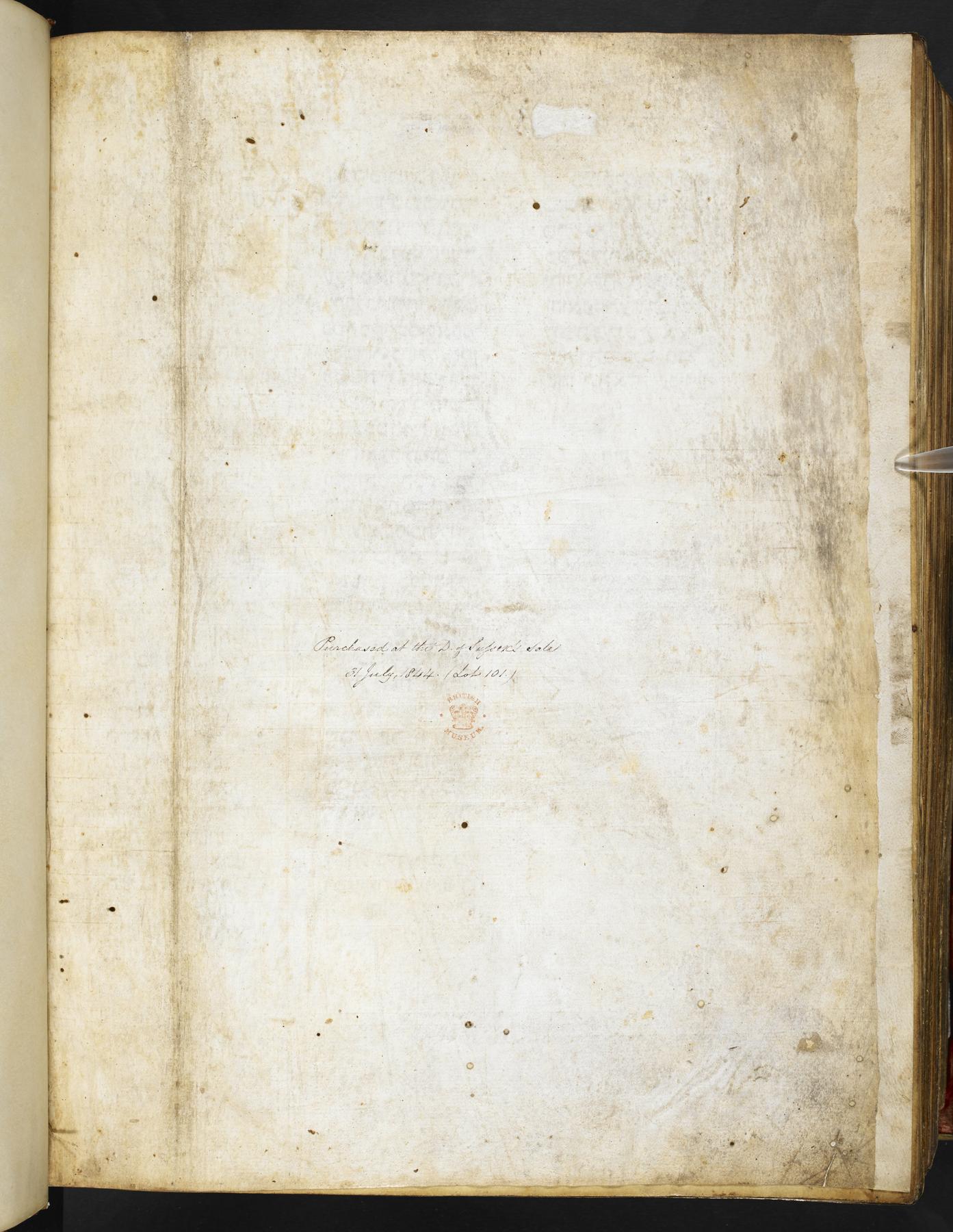 masoretica · Duke of Sussex’s Catalan Bible (British Library Add MS 15250, 1350–1374)Folio 437 verso · 1844 acquisition inscription · no indexed biblical textFolio 437v: a later acquisition note occupies the non-biblical reverse of the final leaf and records the codex’s collecting history without being treated as part of Chronicles.Open page →
 masoretica · Harley Catalan Bible (British Library Harley MS 1528, 1325–1374)Folio 11 recto · 1511 sale and ownership entry · no indexed biblical textFolio 11r: the Hebrew deed records Eliyakim ben Hoshea Finzi's sale of the Bible to Yaakov ben Avraham of Sforno on 29 April 1511; the documentary surface precedes Genesis and has no indexed biblical text.Open page →
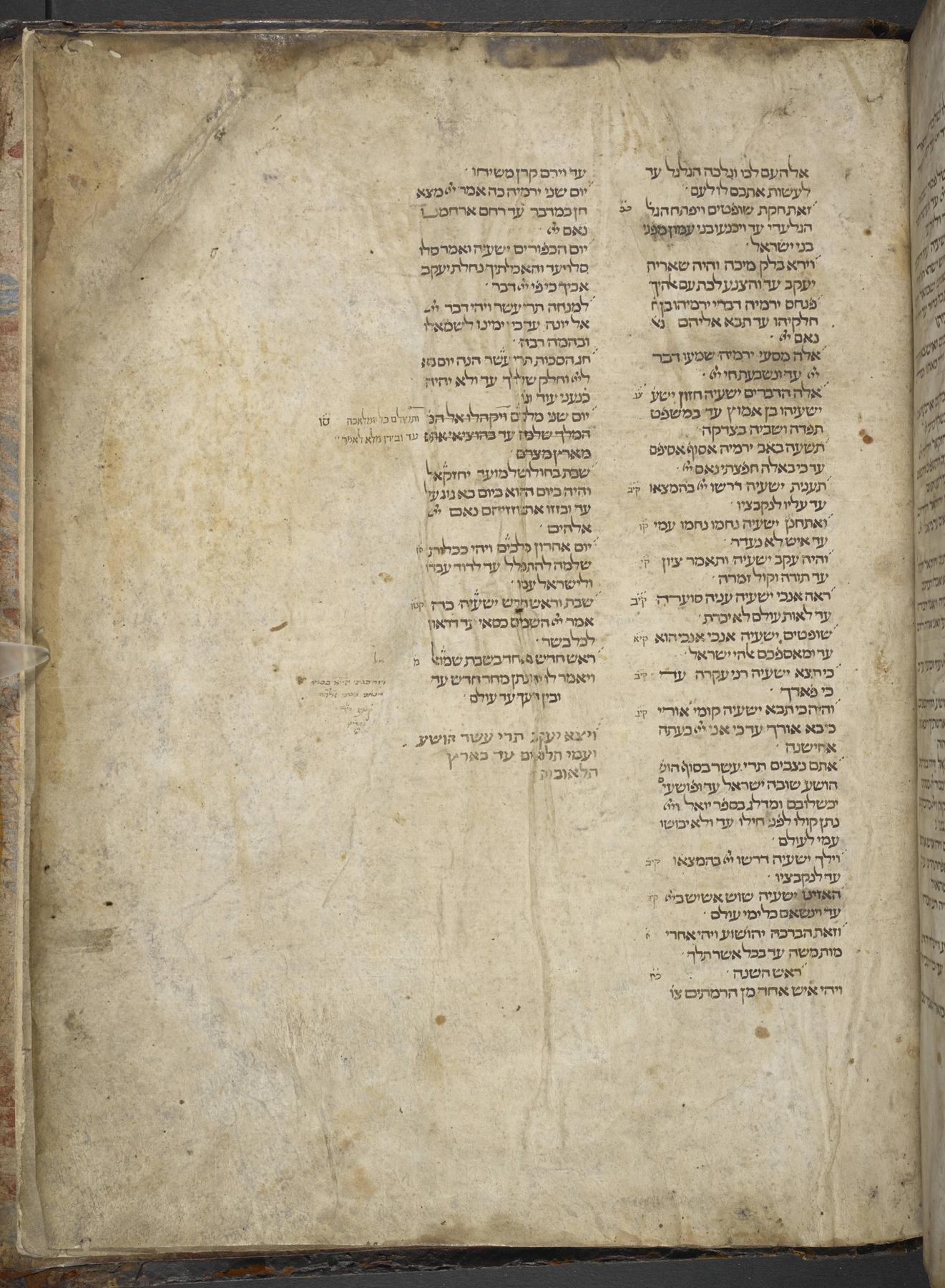 masoretica · Harley Catalan Bible (British Library Harley MS 1528, 1325–1374)Folio 424 recto · haftarah list concludes; David Finzi ownership entryFolio 424r: David Finzi's ownership name shares the concluding haftarah-list surface and records later possession without becoming part of the copied biblical incipits.Open page →
 masoretica · British Library Harley MS 1861 (1325–1349 Torah, Five Scrolls, haftarot, and Job)Folio 1 recto · ownership and readers’ notes · no indexed biblical textFolio 1r: layered Hebrew ownership and readers’ notes record the codex’s circulation; the documentary writing remains visible without being treated as part of the manuscript’s biblical sequence.Open page →
 masoretica · British Library Harley MS 1861 (1325–1349 Torah, Five Scrolls, haftarot, and Job)Folio 307 verso · biblical accent examples and ownership noteFolio 307v: layered Hebrew ownership and readers’ notes record the codex’s circulation; the documentary writing remains visible without being treated as part of the manuscript’s biblical sequence.Open page →
 masoretica · British Library Harley MS 1861 (1325–1349 Torah, Five Scrolls, haftarot, and Job)Folio 310 verso · colophon and ownership notes · no indexed biblical textFolio 310v: layered Hebrew ownership and readers’ notes record the codex’s circulation; the documentary writing remains visible without being treated as part of the manuscript’s biblical sequence.Open page →
 masoretica · British Library Harley MS 1861 (1325–1349 Torah, Five Scrolls, haftarot, and Job)Folio 311 recto · ownership notes · no indexed biblical textFolio 311r: layered Hebrew ownership and readers’ notes record the codex’s circulation; the documentary writing remains visible without being treated as part of the manuscript’s biblical sequence.Open page →
 masoretica · British Library Harley MS 1861 (1325–1349 Torah, Five Scrolls, haftarot, and Job)Folio 311 verso · ownership notes · no indexed biblical textFolio 311v: layered Hebrew ownership and readers’ notes record the codex’s circulation; the documentary writing remains visible without being treated as part of the manuscript’s biblical sequence.Open page →
 masoretica · Bodleian MS. Oppenheim 14fol. 352vFolio 352v: sale and ownership records document the codex's circulation, including its presence in Naples by 1486; later Hebrew and Latin hands continue across the worn non-biblical surface.Open page →
 masoretica · British Library Harley MS 5715 (1300–1340 Sephardic Writings)Folio 165 verso · medieval sale records and British Museum ownership stamp · no indexed biblical textFolio 165v: layered Hebrew sale records include transactions at Perugia in 1375 and 1401, alongside later ownership marks and the British Museum stamp; the page contains no indexed biblical text.Open page →
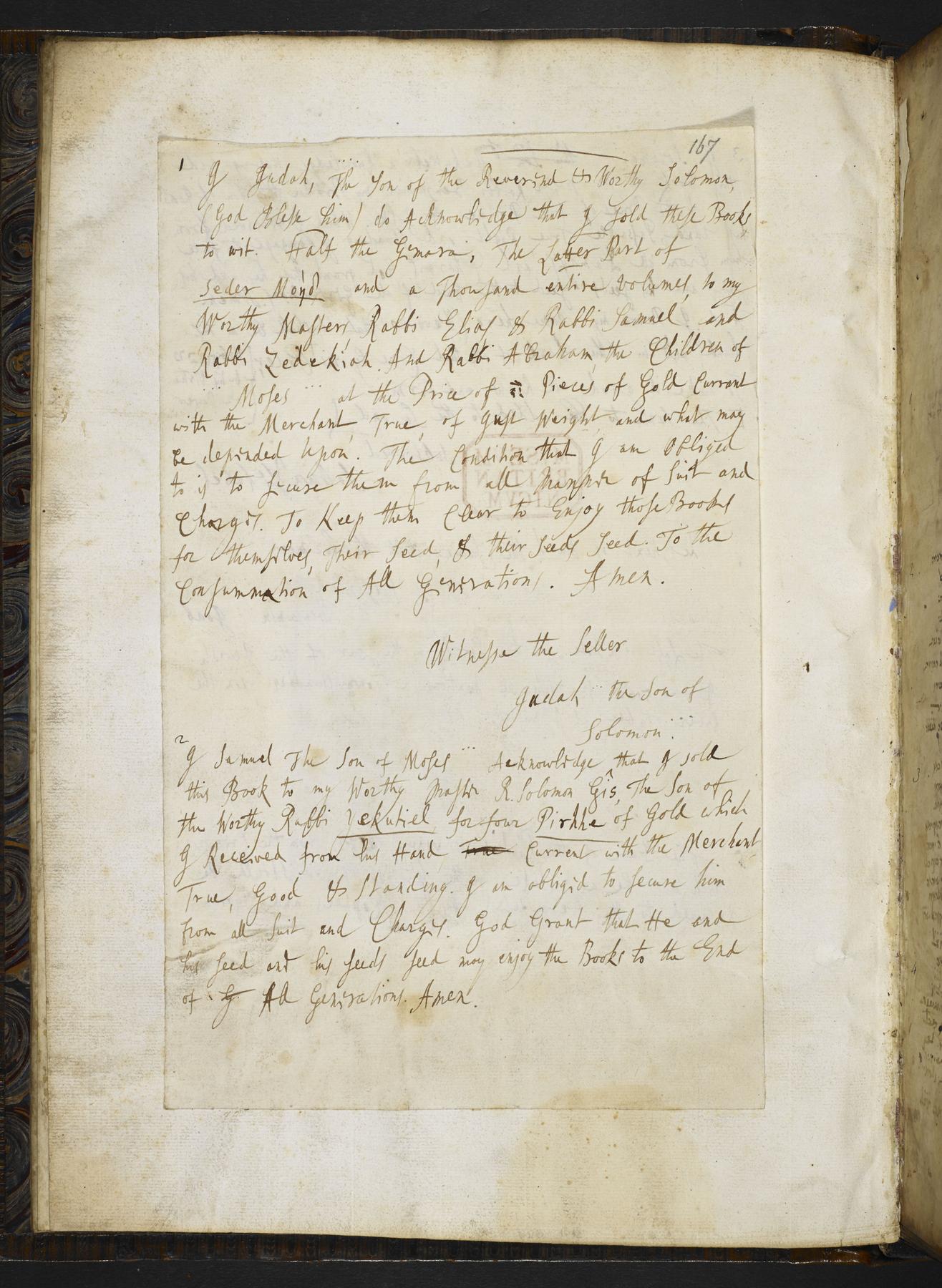 masoretica · British Library Harley MS 5715 (1300–1340 Sephardic Writings)Folio 167 recto · English translations of medieval sale contracts · no indexed biblical textFolio 167r: an attached English translation records the substance of early Hebrew sale contracts, making the manuscript's ownership history accessible to a later reader; the page contains no indexed biblical text.Open page →
Deuterocanonical and related texts
Some biblical manuscripts—including witnesses in the Masoretic tradition—preserve works outside the Jewish canon beside Scripture or its Aramaic Targum. This guide explains the texts, manuscripts, and scholarship, and updates automatically as occurrences are added.
3 texts · 9 occurrences · 6 manuscripts→About Masoretica
Sources & method.
Manuscript images and metadata come from the holding institutions and digitisation projects listed below. Text and versification data come from UXLC, MAM, BIMA / Corpus Masoreticum, the Codex Sinaiticus Project, the DT-UCPH Samaritan Pentateuch, lxx-morph, and STEPBible. The viewer identifies the source used for each manuscript.
Page mapping and text recognition combine repository indexes, OCR, and transcriptions with kraken, Party, BiblIA, and other specialised HTR models. OpenAI Codex is used in developing the site and in running and reviewing this workflow.
Full source, credit, and licence links appear below.
Sources and licences
UXLC Leningrad index Leningrad scan Leningrad photography credit Aleppo page index Aleppo facsimile Codex Sassoon 1053 page index Sassoon scan Sassoon catalogue Rylands Samaritan scan Rylands Samaritan MS 2 scan Rylands Samaritan MS 4 scan Gaster Samaritan MS 1133 scan Gaster Trilingual Samaritan MS 814 scan Gaster Samaritan MS Add 1 scan Gaster Samaritan MS 1858 scan Bodley Or. 699 Samaritan scan Bodley Or. 23 Isaiah scan Kennicott 1 scan Kennicott 2 scan Kennicott 3 scan Kennicott 4 scan Kennicott 5 scan Kennicott 6 scan Kennicott 7 scan Kennicott 8 scan kraken OCR and HTR toolkit Party multilingual HTR model used for Alexandrinus BiblIA medieval Hebrew model Samaritan kraken model Greek minuscule kraken model Sinaiticus line-segmentation model Miqra according to the Masorah text BIMA / Corpus Masoreticum manuscript transcriptions · CC BY-SA 4.0 Samaritan Pentateuch reference text Alexandrinus facsimile Rahlfs 82 catalogue Rahlfs 82 digitization Vaticanus facsimile Sinaiticus edition Sinaiticus electronic transcription Septuagint reference text Greek–Hebrew verse-number crosswalk Keter Aram Tsova typeface
For scholarly use
How to cite.
If Masoretica has facilitated your research, I would be grateful for a citation.
Preferred citation
Dershowitz, Idan. “Masoretica: Manuscript Explorer.” Accessed 12 October 2026. https://www.masoretica.org/.For a specific manuscript page, use its Cite button for the complete Masoretica and holding-institution citations. Pages using BIMA also include a BIMA citation, license link, and description of changes.